After the rain, Montecido’s streets take on a second layer of light. Amber lamps stretch across the dark pavement, white garage lights become bright ribbons, and familiar rows of homes appear above their broken reflections. These neighborhood photographs turn attention away from the distant skyline and toward the surfaces, trees and corners residents pass every day.
The resident describes the collection as Montecido just after rainfall. The wet pavement is visible throughout the images, but the photographs are not a measure of rainfall or a statement that showers had ended across the surrounding area. Their subject is simpler: the way a familiar place changes when water and nighttime lighting share the scene.
Headlights and lamplight redraw the street
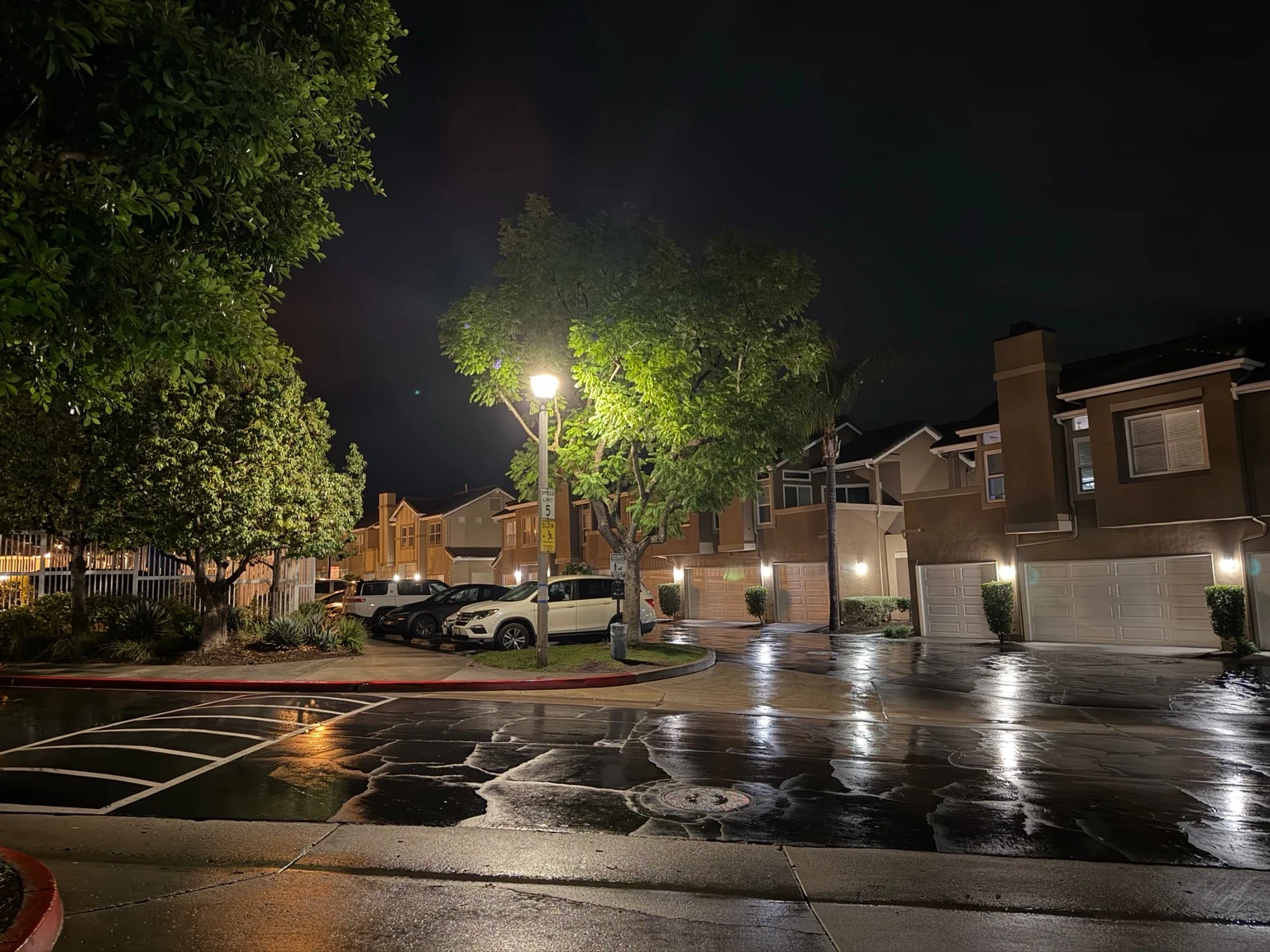
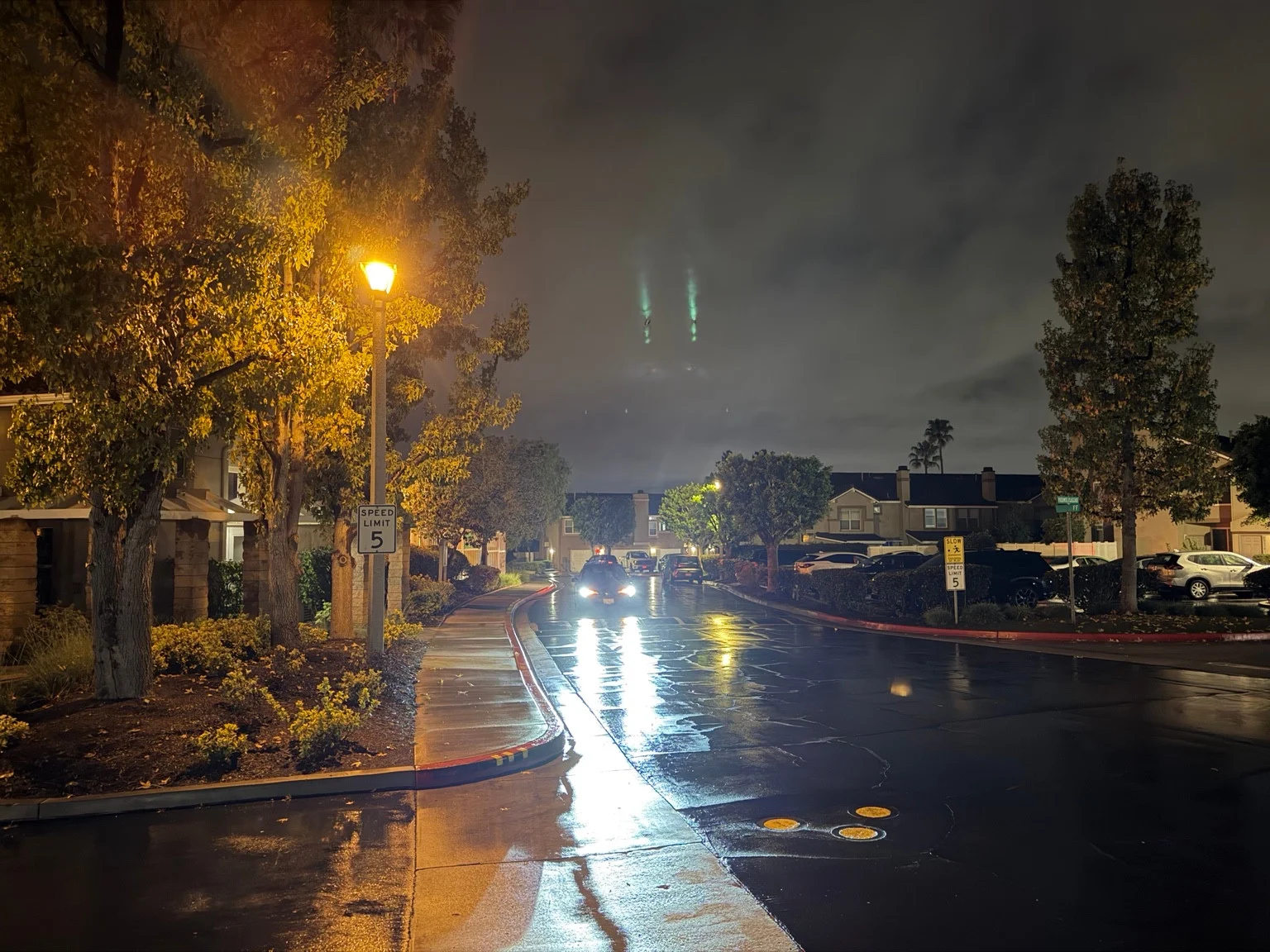
The opening photograph looks along a curving residential street toward an approaching vehicle. Its headlights cast two brilliant white paths across the wet asphalt, while an amber streetlamp lights the trees and sidewalk at the left. Red curbs trace the bend, and homes and parked cars frame the roadway.
A second view settles on garage fronts beneath a leafy tree. Warm wall lights and a bright streetlamp pick out the greenery, while the pavement below carries a patchwork of reflections. The scene feels familiar in its details, yet the surface of the street makes it look newly arranged.
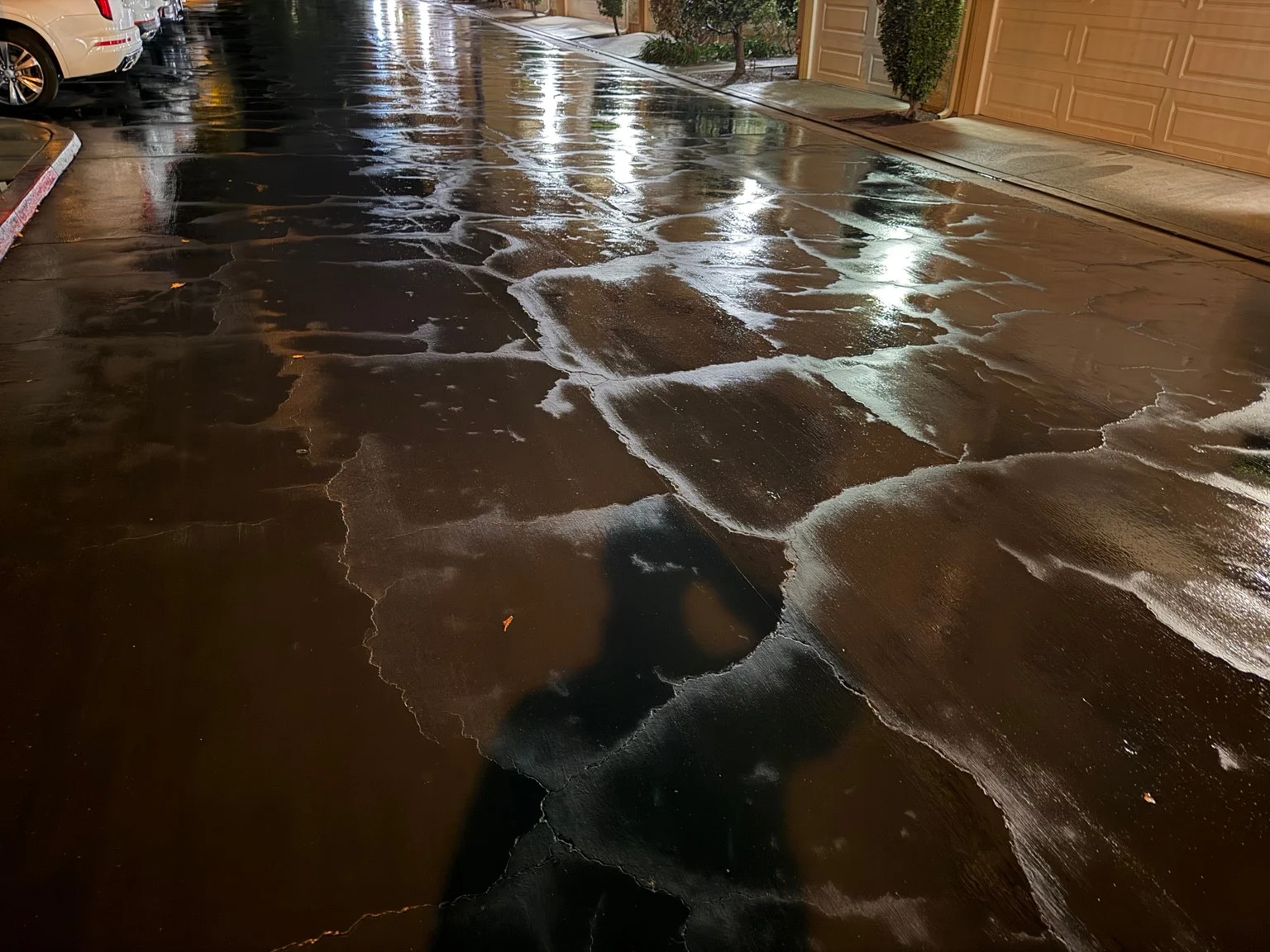
The third photograph turns the camera downward. Here, the road itself is the subject: pale lines, dark patches, reflected lamps and the photographer’s shadow. The image records the pavement’s visible texture without establishing when any cracks or surface markings formed. Rain makes them noticeable; the photograph does not show that rain caused them.
Palms above a golden roadway
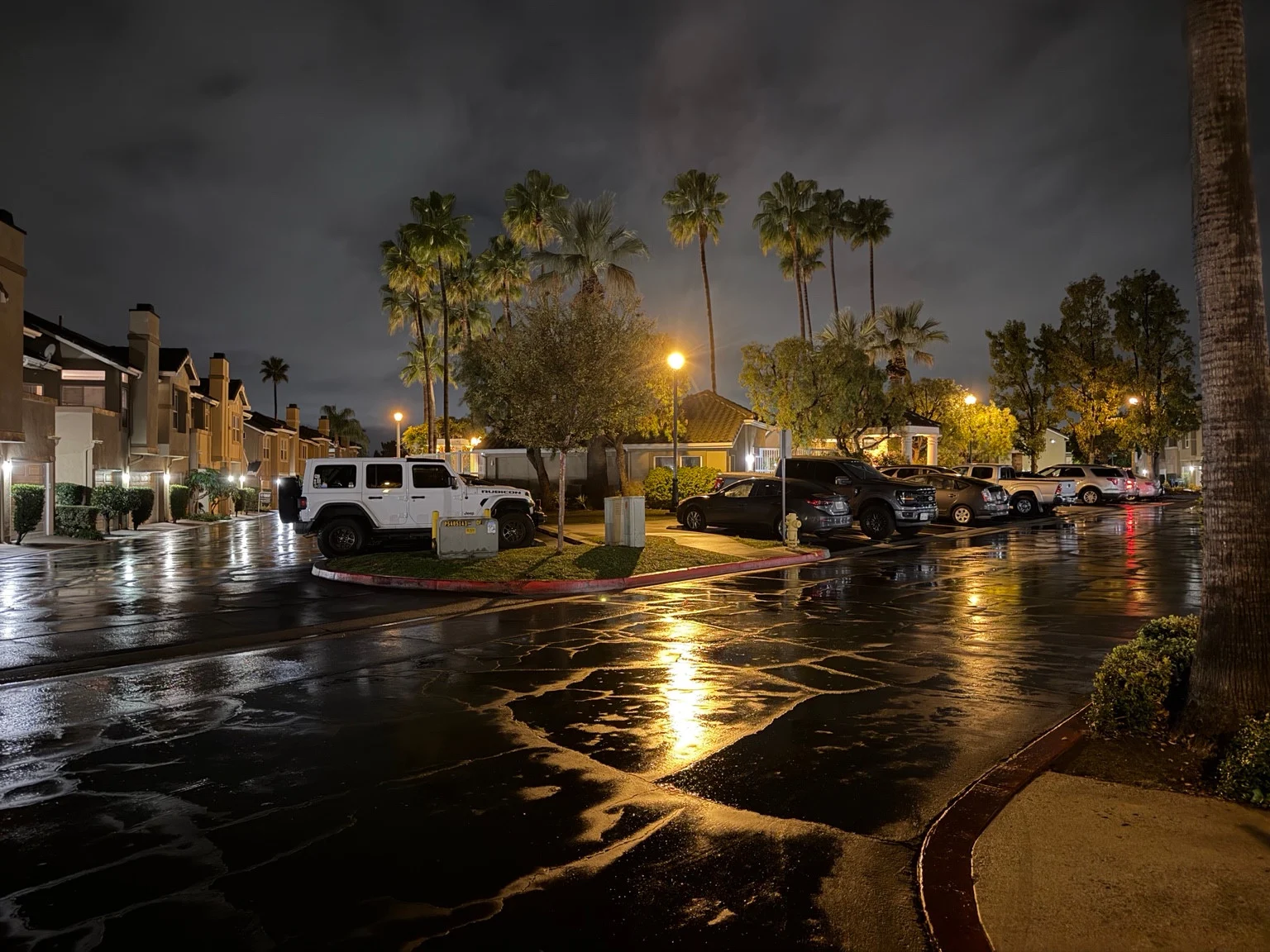
Another wide view opens toward tall palms, a row of parked vehicles and a small tiled-roof building. Golden light pools across the road in front, interrupted by darker sections of asphalt. White lights along the neighboring garages add a cooler tone to the same scene.
The trees do much of the compositional work. Their canopies soften the straight lines of the buildings, while the palms rise into a clouded sky. The parked cars provide a sense of everyday scale. This is not an empty set or an imagined streetscape, but a neighborhood photographed through the changing light of a wet night.
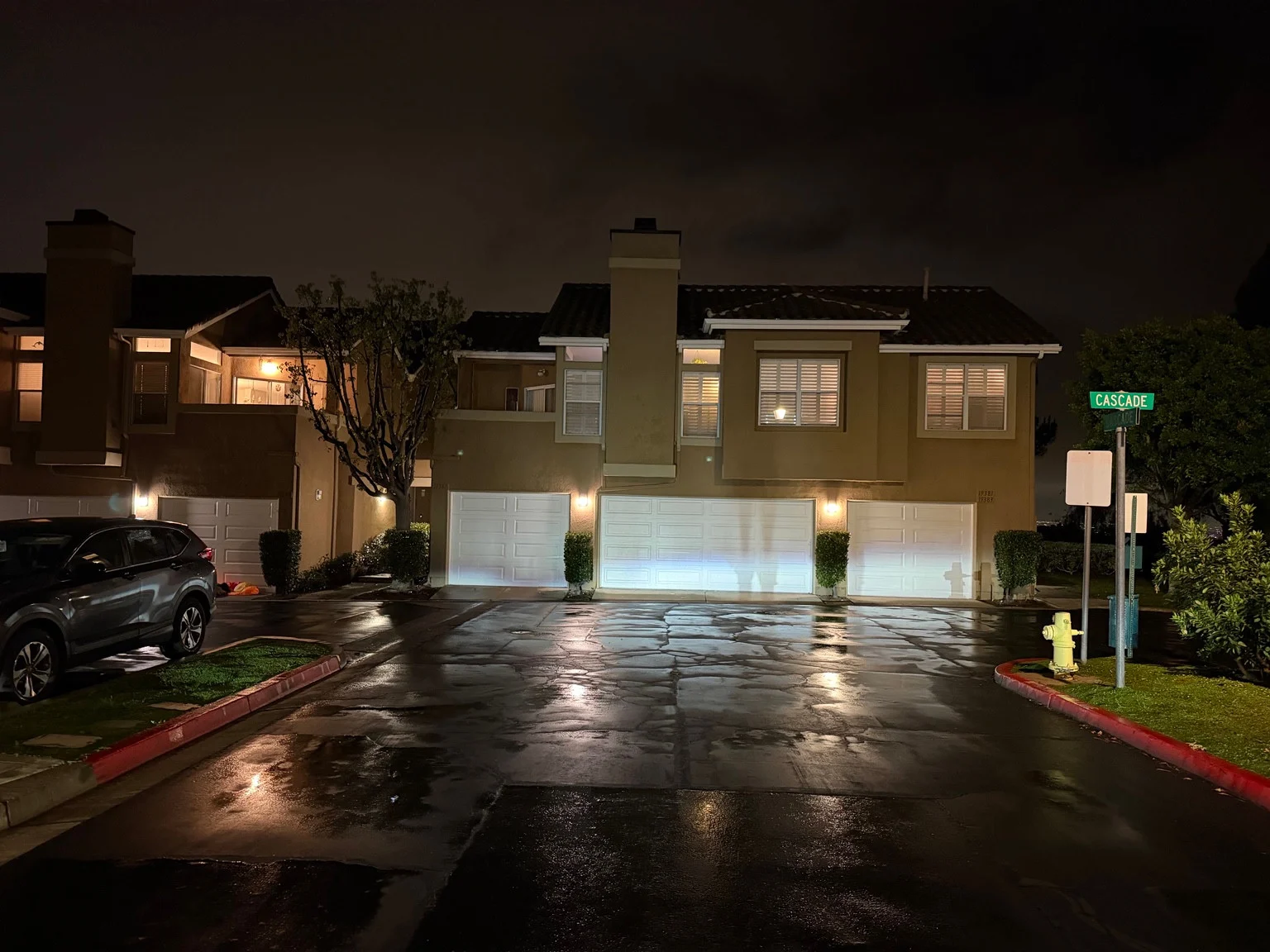
A more direct view of a row of homes follows. Garage doors and upper windows face the camera, with shrubs, a street sign and a yellow hydrant at the edge of the frame. Nothing about the image requires identifying the occupants: the interest is in the architecture, light and reflective roadway.
Red, green and white reflections
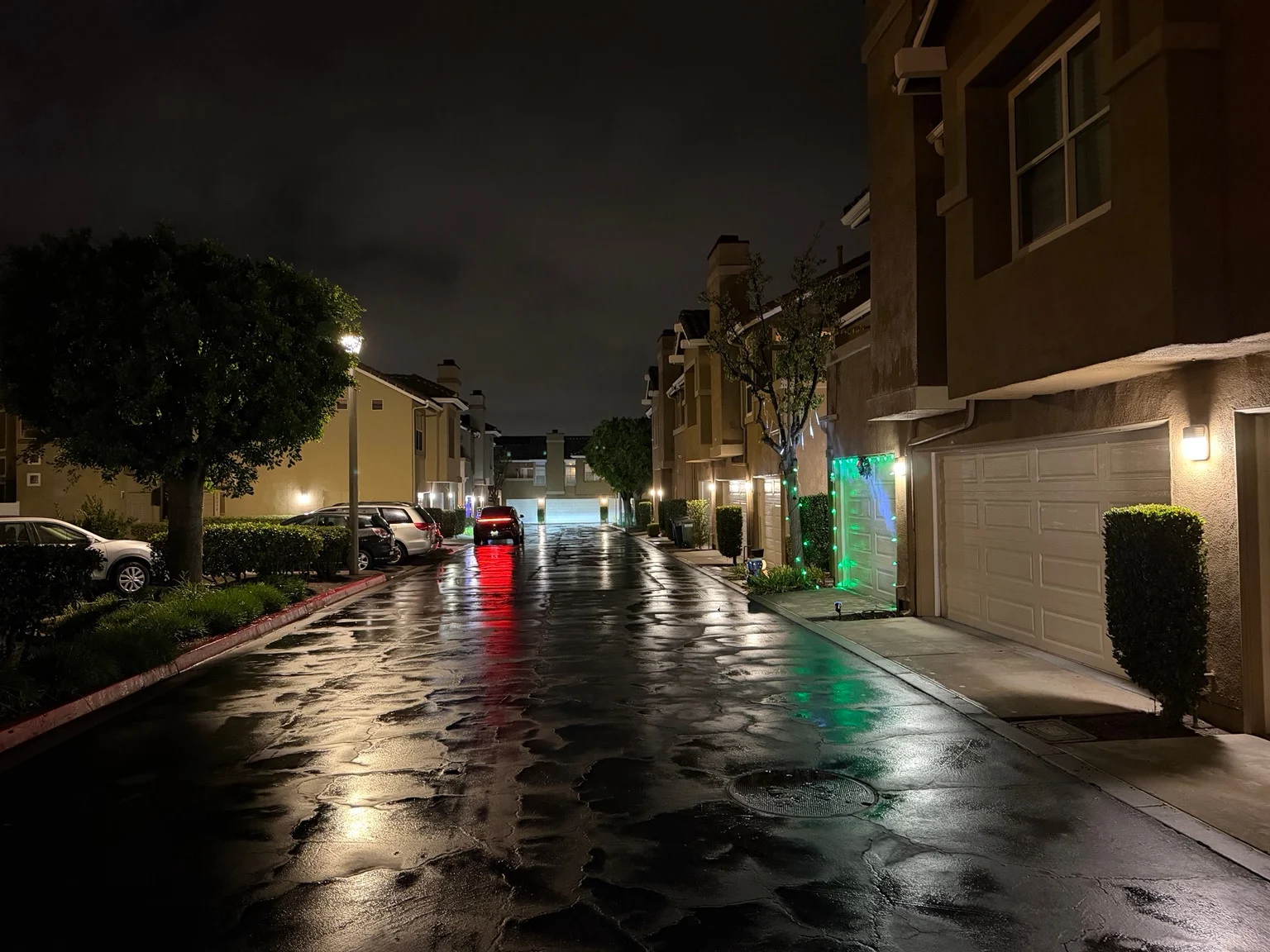
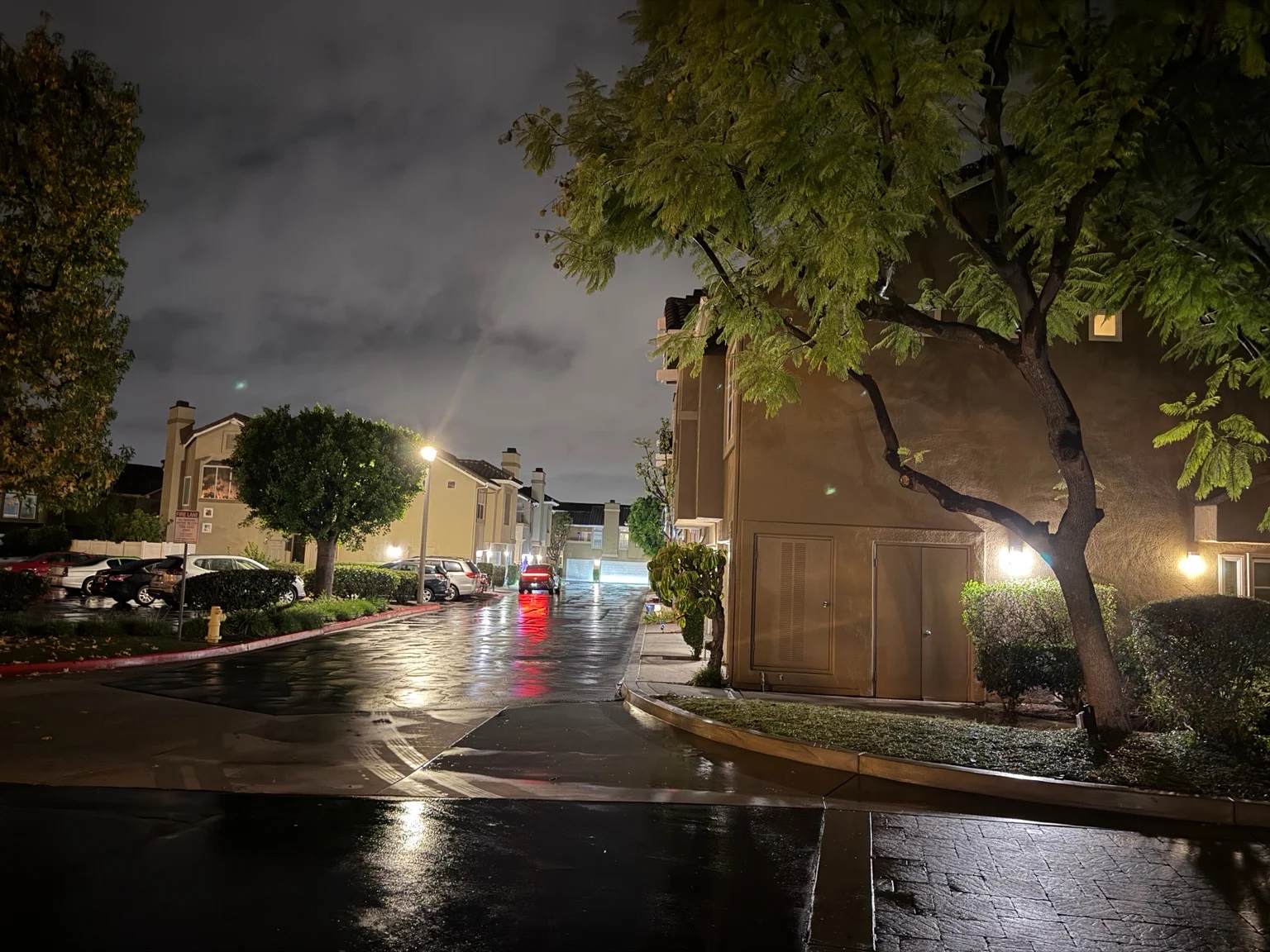
Two photographs look down a narrower residential lane. A vehicle’s red rear lights leave a vivid streak on the pavement. Green decorative lights around one garage add another color, while a repeated line of white wall lamps draws the eye toward the far end.
The angles are similar but not identical. One emphasizes the length of the lane and the bright green reflection; the other gives more space to a branching tree and the corner of a building. Together, they show how a short change in position can turn the same stretch of street into a different picture.
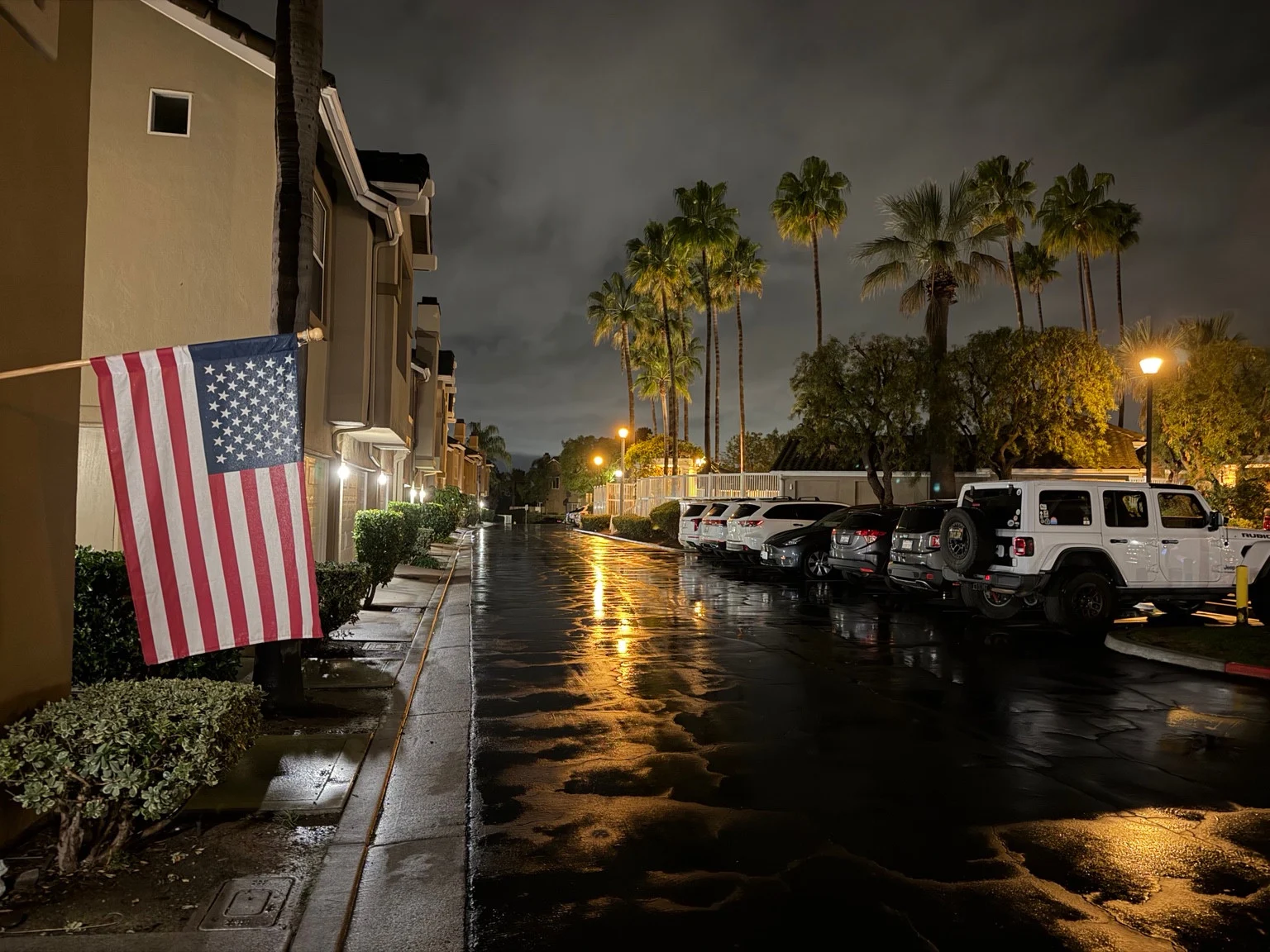
The final image brings an American flag into the foreground, with homes on one side and parked vehicles on the other. Palms rise above the scene, and a chain of amber reflections continues into the distance. It closes the collection with recognizable neighborhood details rather than a distant landmark.
Another way to see Montecido after rain
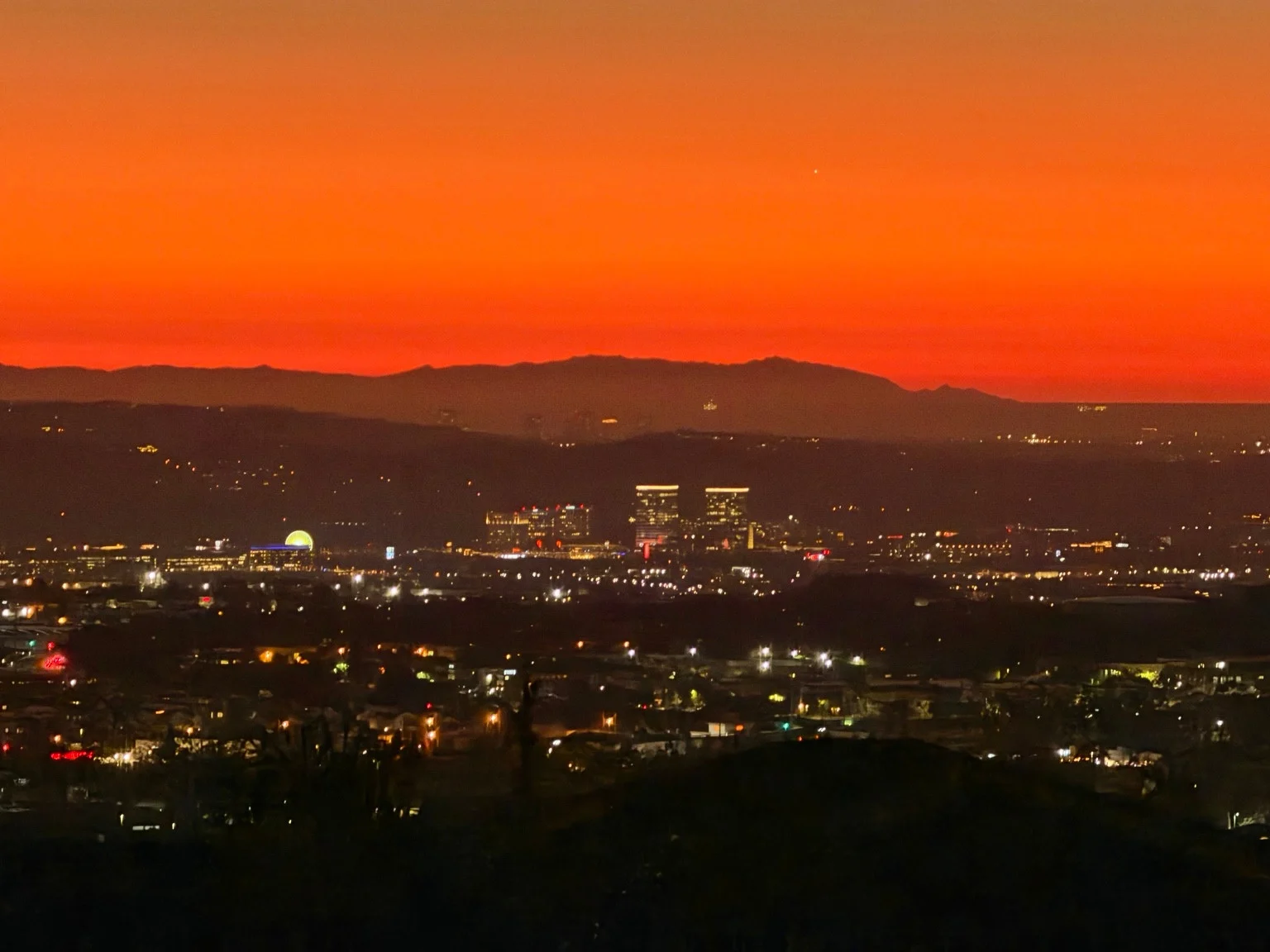
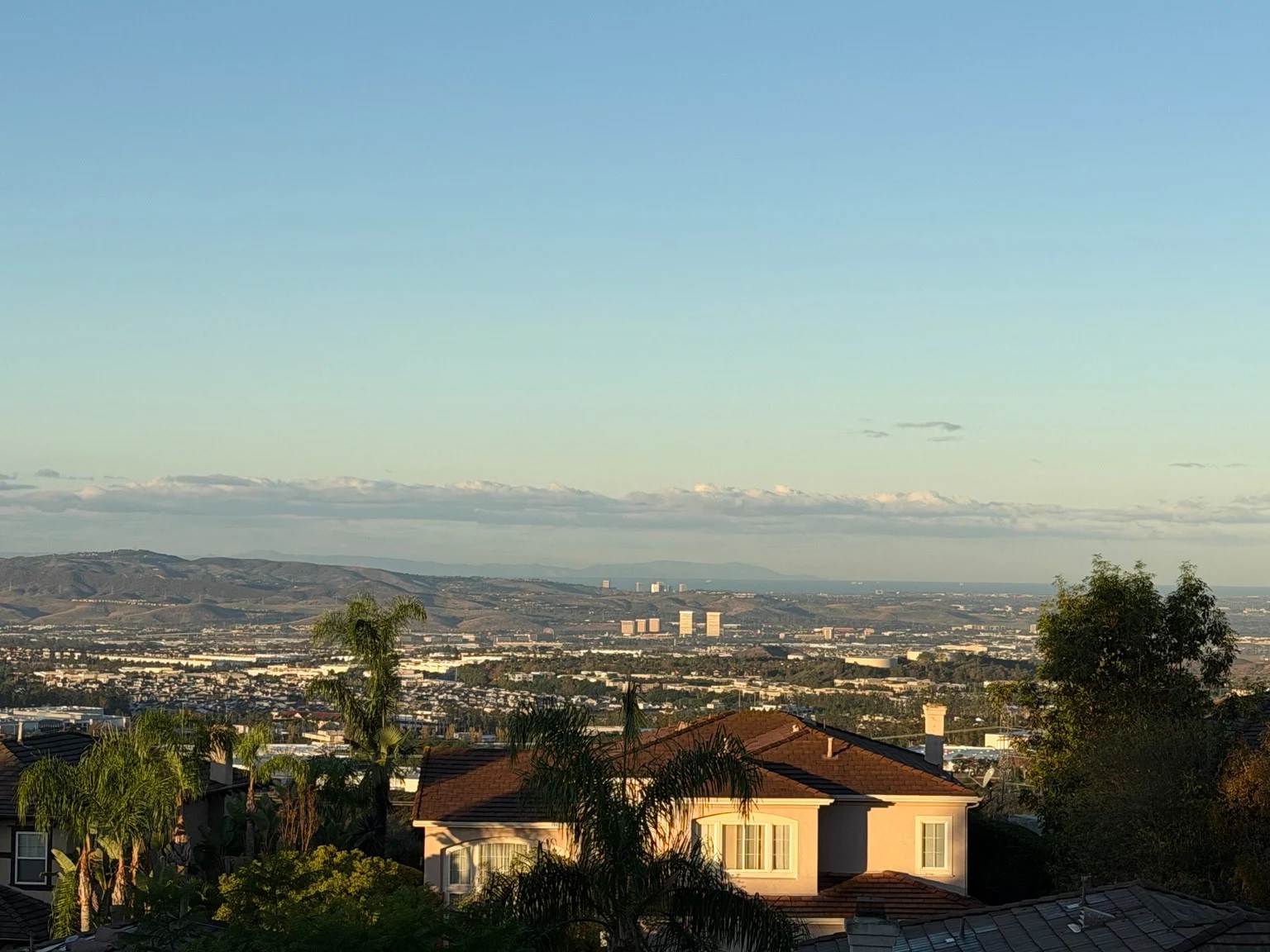
This gallery complements our earlier photographs of rain falling on Montecido’s streets and the Irvine Spectrum skyline after rain. Those stories looked at the weather in motion and the illuminated city beyond the hills. These eight pictures stay close to home.
They invite a slower look at ordinary surroundings: a bend in the road, a garage light, a tree beside a sidewalk, a familiar flag. After rain, those details remain exactly where they were, but their reflections give the neighborhood another dimension.